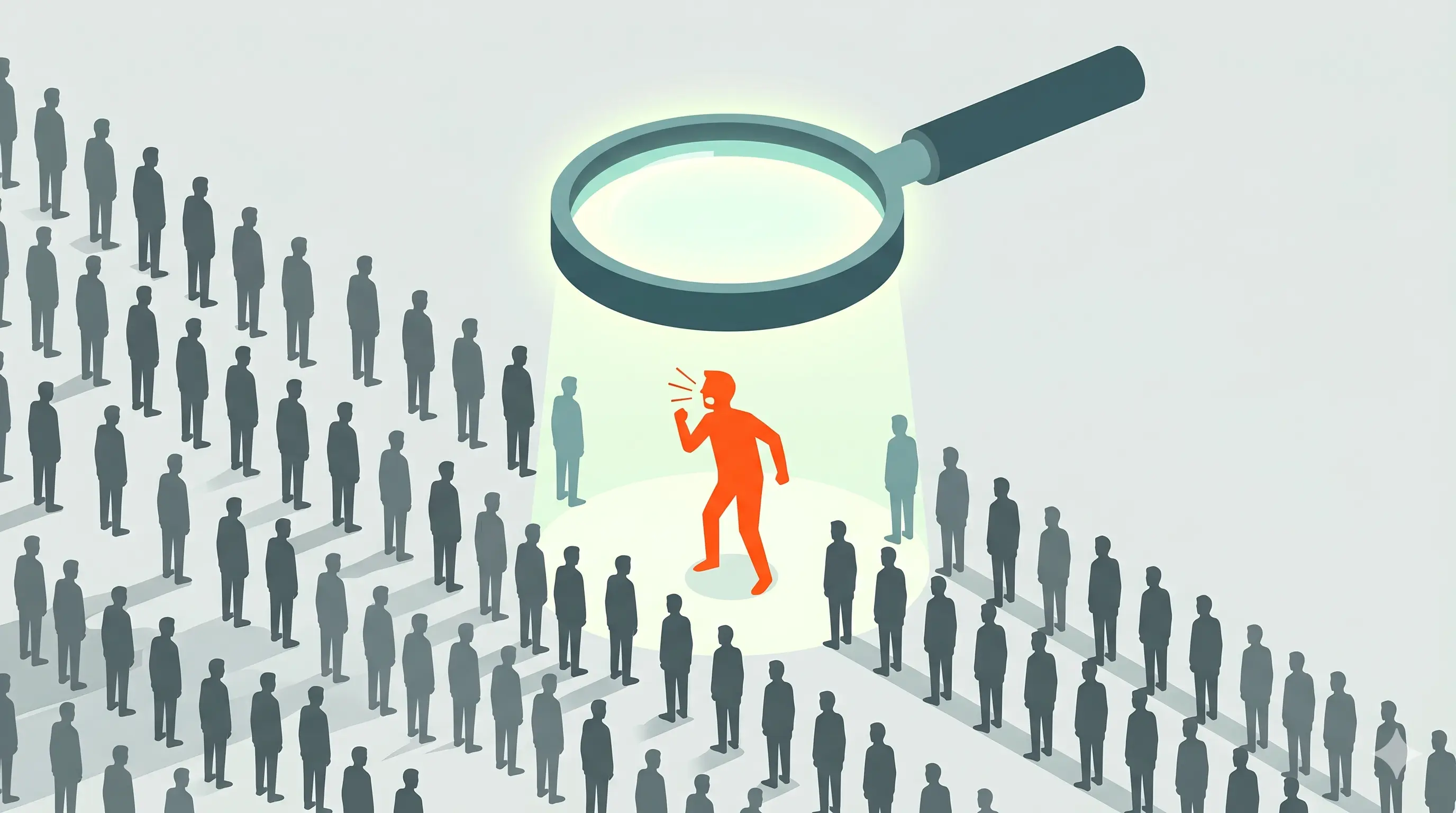
Why it matters: South Korea’s hyper-connected society offers a warning to the world: mistaking the loudest digital extremes for the national baseline inevitably leads to flawed reporting, warped consumer markets, and failed government policies.
Earlier this month, a group of Danish journalist interns invited me to discuss the South Korean media landscape. Since you don’t get to meet Danish journalists a lot in Seoul, I arrived armed with my own questions—chiefly, how the ruling Social Democrats’ immigration policy is playing out back in Copenhagen.
What I did not expect to surface during the meeting was the 4B movement. Frankly, I was surprised they had even heard of it. Yet, here we are.
The Phantom Feminists
I run in circles flush with progressives and feminists, yet I have not met a single soul practicing the 4B lifestyle. Admittedly, my social radius has its limits, but even my most plugged-in contacts have never spotted one in the wild.
So where are they? More importantly, why has the international press—including the NYT—shone a spotlight on a fringe movement so elusive it borders on the mythical?
The internet profoundly distorts scale. A handful of angry people ping-ponging grievances suddenly looks like a national reckoning. Because we now spend more time online than in the physical world, digital anomalies are inevitably mistaken for ground truth.
The Instagram Standard
This phenomenon of overrepresentation is far more insidious than we care to admit. When our meeting inevitably brought up Korea’s fertility crisis, I pointed out that while hyper-competition is certainly a factor, the arena has expanded far beyond classrooms and offices. In the digital age, “normal” has been aggressively recalibrated.
South Koreans are engaged in a relentless digital arms race to broadcast the perfect life. In a hyper-dense, culturally homogenous society—where social mobility was relatively fluid until about a decade ago—the lifestyle of the absolute top tier has somehow become the baseline expectation. Growing up, we endured comparisons to the (often entirely fictional) over-achieving kids of our mothers’ friends—the origin of the infamous umchina. Today, the algorithm simply mainlines the lives of the 1% directly into our feeds, convincing an entire generation that this is the bare minimum.
The Gangnam Delusion
This obsession with the outlier bleeds directly into government policy. Consider real estate. Every administration—most notably the left-leaning ones—fixates on curbing property prices in the affluent Gangnam district. Manhattan would never serve as the benchmark for US housing policy, nor Kensington and Chelsea for the UK’s. Yet, this is precisely what happens in Korea.
The fundamental flaw here is that policy aims are anchored to an overrepresented sample. A national housing strategy should focus on the practical needs of the 90%, rather than pandering to the grievances of a vocal 10%. This is why the Moon Jae-in administration failed, and it is why the current Lee Jae-myung administration will fail, too. It takes political courage to look away from the shiny object everyone else is staring at. Thus far, no one has blinked. While the Lee administration appears temporarily successful in suppressing Gangnam prices, the rest of the capital is now experiencing a thoroughly predictable price surge.
Governing by the Comment Section
Imagine devising a national electoral platform based on the unmoderated comment section of Yahoo News. That is essentially what is happening in Seoul today.
Online comments are the exclusive domain of the deliriously happy and the violently angry. The center does not post. A prominent Korean travel YouTuber recently noted this exact phenomenon: every time he tailored his content to his loudest commenters, his broader viewership tanked. He quickly learned to ignore the “loud few.”
If only our politicians possessed the same commercial acumen. Every day, political parties and the administration attempt to reverse-engineer national policy from the skewed digital samples. Doing the actual legwork—commissioning focus groups, parsing raw data, speaking to an average voter—seems to be asking too much. Thank God for the ballot box. It is the one moment the political class is forced to realize that the real world is infinitely more complex than their social media feeds.