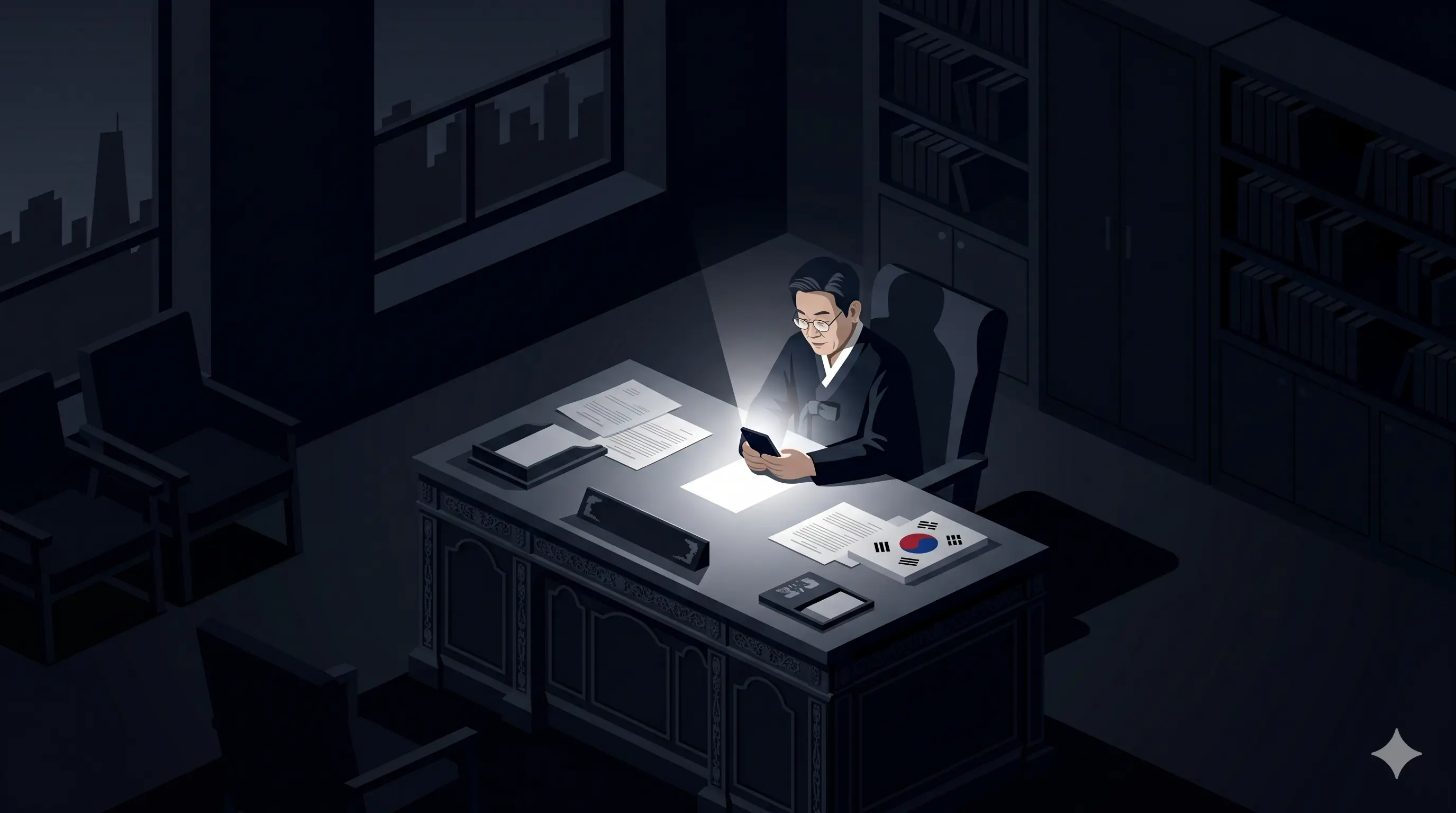
Why it matters: President Lee Jae-myung’s retreat from statesmanlike pragmatism back to impulsive populism—compounded by his astonishing lack of control over his own ruling party—signals a perilous period of unpredictability for South Korea. For international investors and diplomatic allies, this executive isolation threatens to derail market-friendly reforms, destabilize regional diplomacy, and inject Trump-style volatility into the highest levels of one of Asia’s most crucial democracies.
When asked in November about his first summit with Sanae Takaichi—Japan’s Prime Minister, often viewed in Korea as far-right—President Lee Jae-myung offered a measured response:
“I believe that Ms Takaichi’s thoughts and actions will be different now that she is taking responsibility for running the country… For me as well, my judgments and actions must be different now as a President representing the entire nation… compared to when I was the opposition leader.”
His words regarding Ms Takaichi rang equally true for his own political evolution.
The Pragmatist Pivot
It does not take long to detect a deep-seated inferiority complex in Mr Lee’s early writings—autobiographical tales regurgitated endlessly for campaigns and social media. While these narratives cemented his brand as a champion of the underdog early in his career, they also fueled concerns about his fitness for the highest office. Critics, myself included, wondered if he could defend the rule of law, manage societal and administrative conflicts, and articulate a unifying national vision.
Surprisingly, he has managed the job remarkably well, despite broader concerns about the erosion of legal norms. He has adhered to standard diplomatic lines and backed his party’s corporate governance reforms, which partly catalyzed the booming stock market.
His reflective remarks on Japan’s leader and himself marked his absolute peak as a pragmatist. The grandeur of the presidency seemingly eclipsed his old insecurities. This pivot translated directly into political capital: even voters who vehemently opposed him have warmed to his leadership. Though elected with less than half the popular vote, his approval rating now hovers comfortably above 60 per cent.
A Vitriolic Relapse
However, it appears his brief period of dignity is over: Mr Lee is relapsing into his pugnacious, vitriolic self.
What caught international observers off guard was his unexpected criticism of alleged Israeli war crimes. The condemnation was not only out of the blue but entirely devoid of context. If the President wanted to raise an issue, there are far better ways to do that than amplifying an anti-Israeli conspiracist’s tweet.
The administration and his ruling Minjoo party scrambled to repackage the outburst as a principled stand for universal human rights. Predictably, this fell on deaf ears among those who recall his earlier criticism of the Ukrainian president following the Russian invasion, as well as his stubborn silence on North Korea’s abysmal human rights record.
For domestic observers, this relapse was entirely foreseeable. Mr Lee has been gearing up his posting, abandoning the well-maintained moderation he had projected since his inauguration. Written in Korean, these missives were primarily aimed at rallying his base while firing shots at the opposition and critical journalists. In an unfortunate coincidence, he posted his Israel critique just as Elon Musk rolled out X’s automatic AI translation feature globally; the diplomatic reverberations spread faster than anyone anticipated.
Much like Donald Trump, Mr Lee does not retreat when his words ignite controversy. He doubles down—a potent tactic for an opposition street-fighter, but a perilous one for a head of state. Not only did he “clarify” his stance, but he proceeded to label his critics “traitors” in a subsequent tweetstorm, remaining on the offensive ever since.
Recently, he shared a critique of a media investigation into one of his past scandals, adding a personal comment arguing he would have won the previous election against Yoon Suk-yeol had the press remained impartial.
The Naked Emperor
Every political honeymoon eventually ends, but the timing of this meltdown is bizarre given how well things are going for Mr Lee on paper. His approval ratings are stellar, and Minjoo is poised to crush the disorganized conservatives in the upcoming local elections. Yet, his relapse into bad old habits—specifically, impulsive midnight tweeting—suggests he is under immense stress. He has ample reason to feel isolated.
Despite his supreme executive authority and current popularity with the electorate, his grip on the Minjoo party remains painfully weak. His limited experience in central party politics meant he never built a faction capable of rivaling that of Moon Jae-in, the former president and his bitter internal rival. In his bid to seize the helm, Mr Lee undermined the traditional party leadership structure under the guise of “democratization.” While this maneuver secured his party chiefdom and a reentry ticket to the presidential race following his defeat by Mr Yoon, it inadvertently paved the way for another outsider to hijack the party apparatus and render Mr Lee effectively powerless over his own policy agenda.
Although he has never publicly confronted the President, Jung Chung-rae, the current Minjoo chief, operates strictly on his own terms. As a maverick who lacked the institutional backing of the mainstream Gen-86 politicians, Mr Jung built his base by directly courting rank-and-file members with uncompromising populist rhetoric—much like Mr Lee himself. The crucial difference? As head of government, Mr Lee must now pursue moderation; Mr Jung has absolutely no incentive to do so.
Consequently, on key administration policies like prosecution reform, Mr Lee has frequently been dragged along in the wake of Mr Jung’s hardline maneuvers. Minjoo will easily carry the June elections, but it will be a hollow victory for the President, as many of his key allies failed to survive the party primaries under Mr Jung’s watch. Furthermore, Mr Jung’s expected reelection bid at the August party convention casts a shadow over Mr Lee’s remaining term.
Shadows of the Past
His legal vulnerabilities remain a persistent headache. Minjoo’s recent dog-and-pony show of a hearing, designed to highlight alleged political bias in the investigations against Mr Lee, spectacularly backfired by reaffirming key testimonies that implicate him instead. While the administration could still theoretically cancel Mr Lee’s pending prosecutions, they must carefully weigh the political fallout now that the Assembly hearing has refreshed the public’s memory of the President’s shadowy past.
For the sake of South Korea’s future—and indeed, Minjoo’s—one hopes this is merely a temporary relapse and that Mr Lee will quickly return to his dignified, pragmatic persona. The world has already witnessed how unfiltered, uncoordinated messages from a leader can obliterate the trust and predictability of an administration, as seen in the US. If Mr Lee descends into a populist bidding war with his own party chief to appease hardliners, the health of the country’s democracy will rapidly deteriorate, right alongside its criminal justice system.