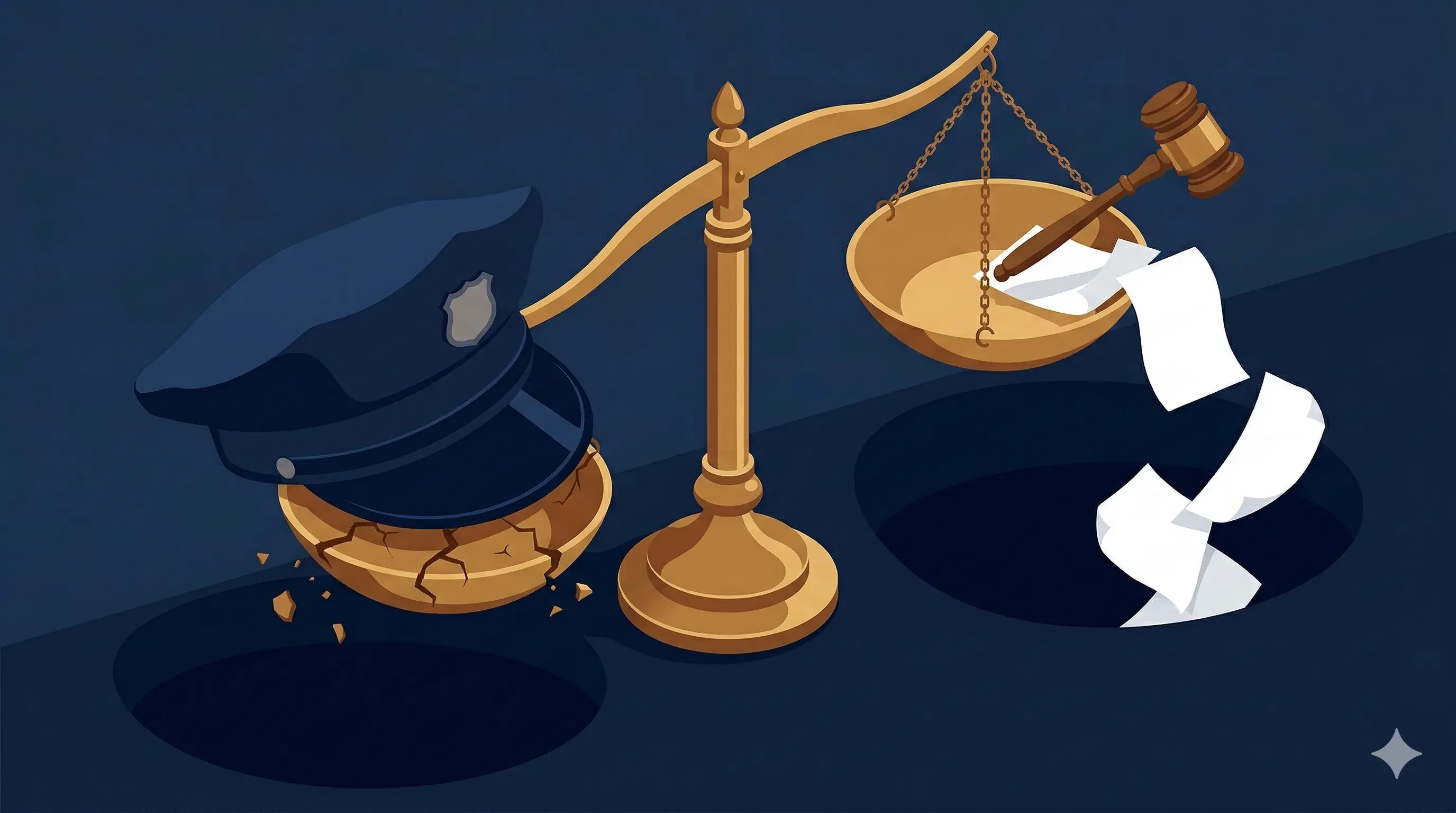
Why it matters: The ruling Democratic Party’s crusade to dismantle the national prosecution service is not merely a domestic political feud; it is a fundamental rewiring of South Korea’s security apparatus. The unprecedented concentration of investigative power to an under-resourced, unchecked police force signals a deterioration in the everyday rule of law, surging compliance and legal costs, and potential unpredictability in how the state targets corporate and political actors.
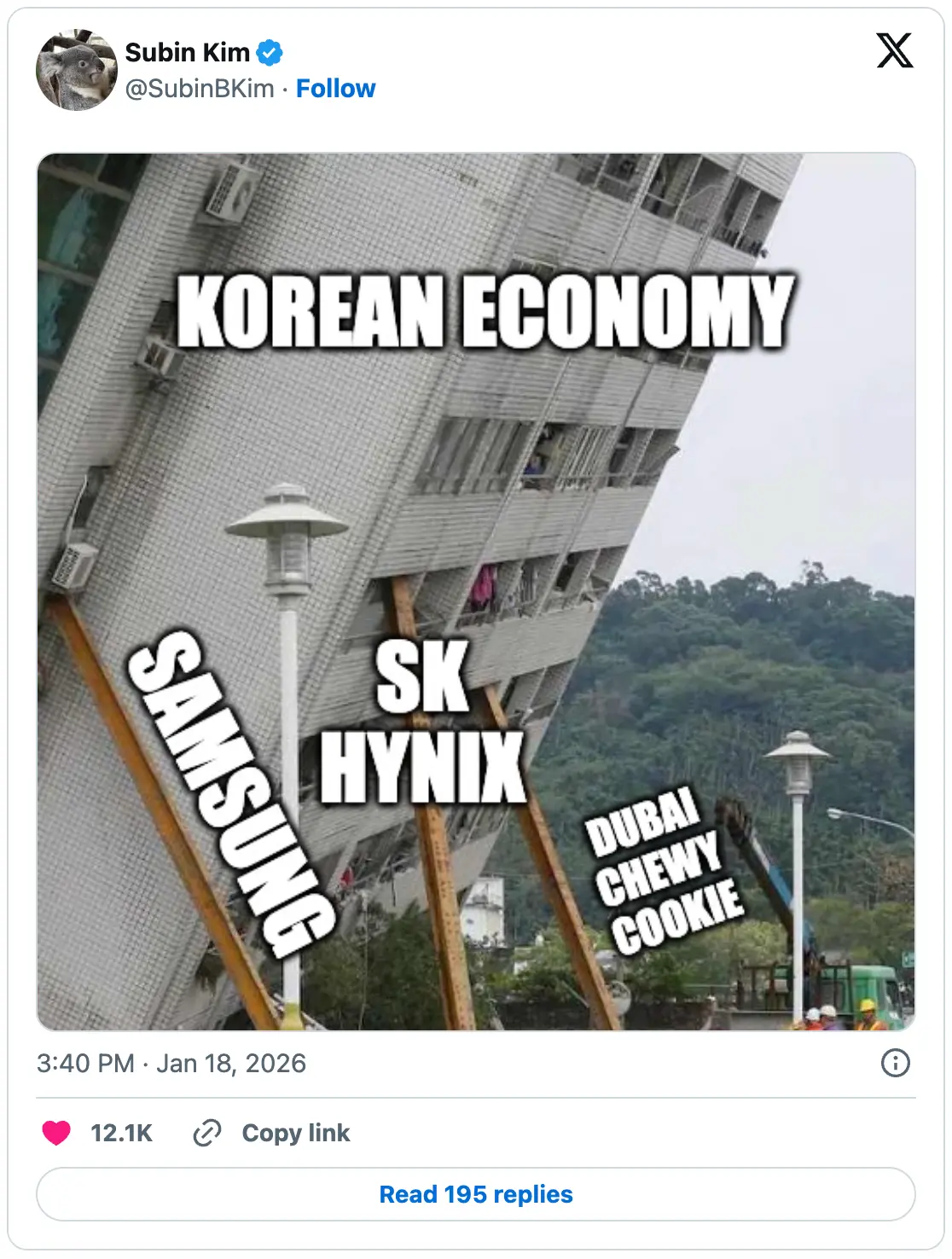
Like any advanced economy, South Korea is beset by structural headaches. Its healthcare and national pension systems—once globally lauded—are imploding as the demographic cliff approaches. Export conglomerates and their employees are thriving, while the broader domestic economy suffers from stagnating incomes, propped up by little more than fleeting micro-trends like the viral Dubai chewy cookie.
Yet the most heated debate within this administration is not about these existential threats. Instead, ruling party lawmakers and the justice minister spent January in shouting matches during committee meetings over a single, obsessive goal: how to permanently excise the national prosecution service from the criminal justice system.
This is not merely about securing get-out-of-jail-free cards for ruling party politicians—including the president, who will face an uphill legal battle the moment his term ends. It is also a manifestation of the ressentiment driving the Korean left.
More fundamentally, it signals a tectonic shift in the country’s security apparatus, placing the police at its apex for the first time since the authoritarian Syngman Rhee era, while saddling the criminal justice system with surging legal costs for ordinary citizens.
A brief history of the Crusade
For the ruling Democratic Party (Minjoo), prosecution reform has been the holy grail of its political agenda for a decade. Prosecutors, the party argues, wield power so absolute it inevitably breeds corruption, forming an untouchable elite that persecutes any politician in its way—who, by sheer coincidence, mostly happen to belong to Minjoo.
The history of Minjoo’s crusade, however, tells a far more cynical story.
When Moon Jae-in succeeded President Park Geun-hye—the first Korean president ousted by impeachment in 2017—Minjoo had ample time and parliamentary seats to reform the Prosecutors’ Office. Instead, the Moon administration pumped up the prosecution’s special investigation department특수부, a unit dedicated to high-profile political corruption and chaebol crimes. Mr Moon wanted to purge the remnants of his predecessor’s regime, and no institution was better primed to act as an attack dog.
One veteran of this department caught Mr Moon’s eye. Previously sidelined by the Park administration for exposing political interference in his work, he had triumphantly led the special probe into the Choi Soon-sil scandal, effectively bringing down the Park presidency. In a highly unusual move, Mr Moon fast-tracked him to Prosecutor General, commissioning him to execute the administration’s laundry list of political scores.
He did his job ruthlessly well. Minjoo loved him—until he turned his sights on Mr Moon’s political darling. When Mr Moon nominated Cho Kuk as justice minister in 2019, the top prosecutor launched a sprawling probe into the slick, limousine-liberal jurist, uncovering his family’s financial irregularities and fraudulent university admissions for his children. Mr Cho never made it to the minister’s office and was later handed a two-year prison sentence.
Minjoo and its base were apoplectic. After months of bitter clashes with the administration, the Prosecutor General resigned. Having exposed the ugly truths of Mr Moon’s presumed heir, this rogue prosecutor suddenly emerged as a beacon of hope for the conservative party still reeling from Ms Park’s demise. He leveraged his newly minted anti-establishment aura to become the next president. Yoon Suk-yeol was his name.
The former top prosecutor’s election victory deeply alarmed Minjoo and the outgoing Moon administration. They rushed to dismantle the ring of power before it change hands. Prior to the election, “reform” had amounted to little more than stripping the prosecution of its authority to direct police investigations in 2020. Prosecutors had still retained the right to directly investigate specific categories of crime, including corruption by public officials and election fraud.
In May 2022, a mere week before Mr Yoon was sworn in, Minjoo fast-tracked a bill to further gut the agency. Prosecutors were largely barred from initiating new investigations and stripped of their jurisdiction over public officials and electoral crimes.
There was little the new Yoon administration could do to reverse the damage. Mr Yoon and the conservative party’s sheer lack of vision and competence led to another massive defeat in the 2024 general election, leaving parliament firmly in Minjoo’s grip.
Following Mr Yoon’s self-destructive martial law declaration and the unexpectedly early advent of the new Minjoo administration under President Lee Jae-myung, nothing could stop the crusade. In September 2025, the government legally abolished the Prosecutors’ Office via an amendment to the Government Organization Act.
Yet this final victory only laid bare the haphazard, grievance-driven nature of the entire enterprise. In a fit of Orwellian spite, Minjoo legally erased the word “prosecutor” from the criminal justice system, replacing the Prosecutors’ Office with the “Public Indictment Office.” There was just one constitutional catch: South Korean law explicitly mandates a cabinet review to appoint a “Prosecutor General.” The logical solution would have been to dilute the office’s powers while retaining its historical name. Instead, they chose pure absurdity: they birthed the Public Indictment Office, yet its chief will still legally be titled the Prosecutor General.
A House Divided
Despite their iron grip on both the parliament and the executive branch, the ruling party and the Lee administration now find themselves at odds over the final strokes of prosecution reform.
Before the amendment abolishing the Prosecutors’ Office takes effect in October, the government must pass the necessary implementation bills. The Lee administration’s proposal, released in early January, immediately triggered a fierce backlash from its own party.
The central flashpoint is the administration’s desire to grant the newly minted Public Indictment Office the authority to conduct supplementary investigations. Minjoo hardliners, however, demand that all investigative powers be entirely stripped from any institution even vaguely resembling the old prosecutors, arguing any remaining investigative authority will nullify the reform.
The January shouting match between the justice minister and Minjoo hardliners proves this is no minor squabble. But why the sudden schism, after years of a unified crusade?
The answer is legacy. Every alteration to the criminal justice system will now bear the Lee administration’s name. Administrations can set off all the political firecrackers they want to dazzle the public during their term, but when the show is over, voters only remember what is left in the ashes. For all the pageantry of inter-Korean peace under Mr Moon, the public now remembers his administration as the one that set the housing market ablaze and toasted marshmallows over the flames.
The cracks caused by the initial 2020 amendment are already visible across the criminal justice system. Senior administration officials are acutely aware of this creeping paralysis, and they are now desperately trying to wire a fail-safe into the new machinery.
The Accountability Vacuum
The core premise of the reform assumes that divorcing the power to investigate from the power to indict creates balance. In reality, it creates an accountability vacuum. If those who indict have no say in the investigation, and those who investigate are insulated from prosecutorial scrutiny, who takes responsibility for the outcome? An investigation has no intrinsic value; it must prove its worth in court via an indictment. Under the new system, indictment officers have little authority to ensure the police do their jobs properly.
The police have enjoyed considerable autonomy since Minjoo’s initial 2020 reforms, which granted them the authority to conduct investigations without prosecutorial supervision—including the power to unilaterally close cases. The cracks are already showing. Last year, a lawyer who had served as a judge for over two decades went public with a disturbing ordeal: he could not get a fraudster who scammed him indicted because the police investigators lacked both basic legal comprehension and professional enthusiasm.
Greater authority entails more work, and the police were woefully unprepared for it. Since Minjoo tipped the scales, officers have been drowning in untenable workloads, prompting an exodus of experienced investigators. More fundamentally, police officers are simply not trained to make complex legal determinations on whether to indict a case on their own.
Worse still, granting a single police officer the power to close a case creates an immense incentive for corruption. Last year, an officer was arrested for dropping multiple fraud cases in exchange for bribes. The private messages she sent to the suspect read like a dark prophecy for South Korea’s new criminal justice system:
“Isn’t it appealing that I’m the one wrapping this up without an indictment? I’m better than any prosecutor.” […] “Starting next year, with independent investigative authority and the changing system [brought about by Mr Moon’s reforms], it will be your world.”
The most immediate consequence of all this is a surge in legal costs for ordinary citizens. Before the 2020 amendment, trained lawyers—prosecutors—reviewed all police decisions on reported cases. Now, the victims shoulder the burden of reviewing a police decision and deciding how to proceed. To appeal a police decision not to indict, you must hire a lawyer—an expense that might have been entirely unnecessary before 2020. Consequently, victims are much more likely to hire counsel from day one. Front-line lawyers report they can now charge a “success fee” simply for getting the police to indict a suspect. As one lawyer aptly described it, this is the transfer of the cost of criminal investigation from the state to the private individual.
But what if there are no identifiable victims? What if it is a corporate whistle-blower case? This accountability vacuum inevitably leads to a lesser standard of justice for all.
Anatomy of the Vendetta
It is not hard to understand the Lee administration’s anxiety over Minjoo’s hardline stance on prosecution reform. No government wants the total wreckage of the justice system as its defining legacy.
But why does Minjoo hate prosecutors with such visceral intensity? True, no politician enjoys prosecutors sniffing around their affairs, but one does not usually torch the entire justice system just to shake off a tail.
In fact, a deep-seated institutional grievance against prosecutors has simmered for decades—not just among leftists, but across South Korean society.
The shifting media portrayal of prosecutors serves as a valuable barometer. From the 1990s through the early 2000s, prosecutors were lionized as champions of justice who dared to challenge the establishment. They had little reason to fear the consequences of their crusades: a demoted prosecutor could always pivot to a lucrative private practice, as the number of lawyers was strictly capped by brutally competitive exams and a state-imposed quota.
By the 2010s, the tide had turned. The introduction of the law school system began to dilute the prestige of the legal profession. Worse, pop culture increasingly depicted prosecutors as corrupt henchmen of the elite—and, eventually, as the beating heart of a South Korean “deep state.”
The catalyst was the 2009 death of Roh Moo-hyun, the former progressive president who took his own life amid an intense bribery investigation. A man of immense pride, he apparently could not bear to see his legacy stained. His suicide forged a potent narrative framework for both the political and cultural left: the righteous politician martyred by a conservative deep state. While there was likely no coordinated conspiracy to propagate this idea, the trope of the all-powerful, easily corrupted prosecutor became the most successful byproduct of a Gramscian war of position in Korea. Today, hardly a Korean drama—even a run-of-the-mill rom-com—goes by without a male protagonist who is—or used to be—a prosecutor.
Mr Roh’s political disciples have weaponized this narrative ever since. This is driven, at least in part, by a collective guilty conscience: it was his own allies who pushed their mentor over the cliff, denying and denigrating him when the scandal first broke. In his final days, Mr Roh was a Girardian scapegoat incarnate. To absolve themselves, his heirs maintain that prosecutors are an inherently evil institution beyond democratic control—and therefore, must be dissolved.
The True Root of Abuse: Politicized Personnel Policy
A mere glance at recent prosecutorial behavior is enough to dismantle their argument. In a highly unusual move, the prosecution recently chose not to appeal court decisions involving high-profile Minjoo politicians.
While prosecutorial power is ripe for abuse, a ruling party has always held a powerful leash: the power to promote. A president wields ultimate authority over government personnel, including the prosecution service. Furthermore, with state quotas on the number of lawyers significantly liberalized, simply holding a prosecutor’s badge no longer guarantees the lucrative private-sector exit of the old days. Today, your final rank dictates whether you secure a luxurious retirement via a cushy advisory role at a top-tier law firm like Kim & Chang.
This is why previous administrations never bothered to torch the justice system just to kick the prosecution’s collective ass. You can control what the agency does—for the most part—as long as you hold the leash tight.
There is, however, a catch: the leash goes slack as a presidential term nears its end. If your party fails to secure reelection, your successors will inevitably come after you, siccing the very same prosecutors on you that you once unleashed upon them.
Minjoo, it seems, has found a way to break this brutal samsara: dismantle the prosecution and, by extension, the entire criminal justice system. But mere destruction is not enough to ensure a safe political afterlife; you need a new partner in the state security apparatus. The most chillingly original aspect of Minjoo’s reform is where they found one—turning to an institution largely sidelined in the national power calculus since democratization: the police.
The Rise of the Police
Beneath this partisan feud over criminal justice reform lies a development of profound structural importance: a tectonic shift in the state security apparatus.
Historically, the prosecution functioned as the crown jewel of state security—wielded alongside the police and the spy agency to purge political opponents. Previous administrations, left and right, happily utilized this prêt-à-porter toolkit. In a presidential system where proximity to the leader trumps all, the president’s interface with this apparatus was deliberately given the misleading title of “Senior Secretary for Civil Affairs민정수석비서관,” a role historically reserved for a senior prosecutor.
However, the police had long sought to upend this status quo, and Minjoo eventually found a willing ally in them.
For decades following democratization, the police had been relegated to second-tier status beneath the prosecutors. But this was not always the case. In the republic’s early days, authoritarian President Syngman Rhee leaned heavily on them; the senior officer in charge of his security detail was unofficially dubbed the “vice-vice-president.” Military dictatorships also favored the police, who ticked all the strongman boxes: intelligence gathering, physical violence, and criminal investigation. Only when democratization replaced brute force with “lawfare” did the police lose their prestige to the prosecution.
Yet alumni of the elite Korean National Police University (KNPU) continually pushed to reclaim their former glory. Their ultimate goal: breaking the prosecution’s control and establishing a police monopoly over criminal investigations. Hwang Un-ha, a prominent KNPU alumnus, became the standard-bearer for this crusade, building a devout following among junior officers by clashing publicly with prosecutors. Upon retiring from the force, he seamlessly pivoted to politics, joining Minjoo and securing a seat in the National Assembly.
The 2020 criminal procedure amendment was a landmark victory for this Minjoo-police alliance. It stripped the prosecution of its authority to direct and supervise police investigations. But the Moon administration stopped short of seizing all investigative power. After all, why throw the Ring of Power into Mount Doom when you’ve just become the Dark Lord? After a decade of conservative rule, progressives finally had the power to turn the prosecutorial machinery against their rivals. This hubris backfired spectacularly, as we’ve seen, culminating in the rise of Mr Yoon.
Following Minjoo’s recent series of reforms, the pyramid of power has been entirely inverted. Today, the police oversee criminal investigation, domestic intelligence, counterespionage, and, most importantly, election crimes (on average, 10 to 15 elected officials lose their jobs in every election cycle for violating election law).
It is, without a doubt, their brightest day since the authoritarian era.
Conclusion: Everyone Loses
Minjoo supporters who celebrate this reform as a victory may change their minds the moment they fall victim to a crime. Overwhelmed and overworked police investigators will be drastically slower to make progress on cases, and may even abandon them entirely. Citizens must brace themselves if their perpetrator is a wealthy financial criminal, who can easily buy their way out of trouble by retaining a lawyer well-connected to the police brass. Top-tier law firms have already begun snapping up high-ranking police officers as advisors—and so have the prime suspects in several high-profile cases.
Few of these supporters grasp how a police force completely untethered from democratic checks and balances imperils the republic. The authoritarian days of President Syngman Rhee are too distant a memory. We will all find out soon enough.
Even the police, collectively, are not the true winners. For rank-and-file officers, this victory simply means a crushing administrative burden and an investigative authority for which they are entirely unprepared. The police leadership does not care. Their aim from the beginning was strictly self-serving: they simply wanted their cut of the prestige and power historically reserved for the legal elite’s robber barons.
In the short term, there is little to stop the Minjoo-police alliance. The conservatives remain in disarray, seemingly clueless about how to win back voters. The alliance will help sustain Minjoo’s reign, cementing its status as the nation’s prime governing faction, akin to Japan’s LDP.
In the long term, however, there is a fatal catch. How long will it take for the police to realize that a total lack of checks and balances means even Minjoo cannot control them? And will they still stand loyally by Minjoo if the conservatives eventually claw back power?
Thus, the wheel of samsara turns—only with different nameplates.