Lessons from Angry Staff History Month
What is your New Year’s resolution?
Sometimes, resolutions are less about self-improvement and more about sounding cool at dinner parties. We all have the repeating classics—”read more books,” “practice music”—my own top boilerplate entries. (But this year, I have a cooler objective: achieving a VO2 max of 50mL/kg/min. If you aren’t familiar with the term, do take a moment to research it. You can thank me later.)
If you lack a resolution, I have a suggestion: Be nice to your staff.
You don’t need to be an altruist to see the wisdom in this. In fact, the most selfish among us need to heed it the most. As Dick Morris wrote in The New Prince:
“The basis of the power of staff members is that they can’t be fired. Few politicians can countenance a bloody trail of angry, disgruntled former aides spilling their guts to the newspapers… a public official’s staff today could well be his accusers, or at least his detractors, tomorrow.”
Last December—which future historians may label Angry Staff History Month—provided a series of living lessons on this very theme.
Trial by leaks
It began in the entertainment world. Park Na-rae, a prominent comedian, was sued by her former managers for a laundry list of offenses, including bullying and unpaid wages.
Soon, the leaks followed—spearheaded by a detailed allegation of illicit drug use. It appears these disgruntled managers had been meticulously documenting their employer’s wrongdoings for years, waiting for the right moment to hit ‘send.’
Ms Park had to cease her TV appearances immediately. Given the gravity of the accusations and the Korean audience’s puritanical demand for ethical integrity, we are unlikely to see her on screen again anytime soon.
The ‘slow aging’ guru ages fast
Perhaps the most shocking fall from grace belonged to Dr Jung Hee-won. The geriatrician’s fame had skyrocketed alongside his “slow aging” philosophy—you likely recognize his face from packages of instant rice and “healthy” snacks. But the guru of longevity suddenly revealed he was pressing charges against a research assistant for stalking and blackmailing.
The assistant’s counterclaim, however, turned the situation on its head. She alleged she was not only a victim of constant sexual harassment but also essentially his ghostwriter, having penned much of his books and social media content.
The screenshots of KakaoTalk conversations she shared with the media were sufficiently damning to cause corporate collaborators to scrub his name and face from their merchandise. The dumping of his endorsed farro rice products may well be his final service to the “slow aging” movement for the foreseeable future.
The truth seems murky, as Dr Jung’s retaliatory release of other chat logs suggests the assistant may have been emotionally manipulating him while he suffered from psychological distress. (Notably, in both the Park and Jung scandals, Dispatch played a central role—truly Korea’s answer to TMZ.)
While Dr Jung’s situation isn’t a typical case of gapjil (abuse of power), it illustrates just how disastrous a staff dispute can become.
The ‘Madame General’ meltdown
Now, to the main gala of Angry Staff History Month.
Eyebrows were raised when a report revealed that Kim Byung-kee, the Minjoo floor leader, met with the leadership of Coupang in September, just a month before the parliamentary audit. The e-commerce giant has been under fire for a series of industrial accidents, making it the presumptive star of Yeouido’s annual corporate bashing festivities. For a ruling party floor leader to meet them privately was, politically speaking, unwise.
But Mr Kim’s explanation made the meeting even stranger. He claimed the meeting had nothing to do with Coupang’s corporate malfeasance, but was regarding a former staff member of his who was now working on Coupang’s government relations team. It turns out Mr Kim met the CEO specifically to demand his former staffer be fired. He was successful.
The bad blood appears to have originated in December 2024, when Mr Kim conducted a mass layoff of his office staff. He had discovered a secret Telegram chat room where his aides insulted him and his family—specifically mocking his wife as “Madame General사모총장,” a title that speaks volumes about how she commandeered staff hired to serve the state, not the spouse.
After Mr Kim was elected floor leader last June, the press began sniffing around. When a story broke alleging he used parliamentary staff and a local councilor to facilitate his son’s college transfer, Mr Kim suspected his former aides were the source. He took his revenge at Coupang.
Then, all hell broke loose.
A cascade of leaks followed, detailing Mr Kim’s abuse of office—from ordering staff to assist with his son’s intelligence work to demanding VIP protocol at airports and hospitals for him and his families.
However, the mother of all leaks destroyed not only Mr Kim’s already thinning integrity but potentially his party’s too.
A recording of private conversations was released in which a Minjoo lawmaker confided to Mr Kim that she received money from a city councilor candidate in exchange for a nomination. At the time, Mr Kim was leading the party’s candidate nomination committee for the 2022 local elections. While the leaker’s identity remains unconfirmed, the audio perspective suggests Mr Kim himself recorded the conversation—implying the leak came from his absolute inner circle.
Mr Kim must now answer a burning question: Why did the candidate in question receive the party nomination despite Mr Kim’s knowledge of the bribery?
With less than 150 days until the next local election, Minjoo faces a crisis of integrity. The fallout is raining down on the party leader and even President Lee.
When a rat dares to bite the cat
In Korean politics, corruption in party nominations—especially in local elections—is sadly common. But leaks by former staff? That is a rarity, usually reserved for begrudged political rivals.
For most parliamentary staff, leaving a lawmaker’s office is not the end of their career. They often seek employment with another lawmaker or eye a run for office themselves. Even those moving to the corporate world usually land in government relations, where maintaining good ties with their former employer is professional survival.
All of this relies on reputation. Your next job depends on what your former abusive boss says about you.
Furthermore, this is a terrible time to cross Minjoo. Just six months into its term, the Lee administration enjoys strong approval ratings. The ruling party commands a near-supermajority in parliament, and the opposition remains in disarray. Minjoo is poised for a landslide in the upcoming local elections.
Why, then, would a leaker strike when the odds are so heavily stacked against them?
The answer lies in the weight of Mr Kim’s hubris. Having started his career in the national spy agency during the military dictatorship, Mr Kim appears to have little sense of how subordinates can fight back in a modern democratic society.
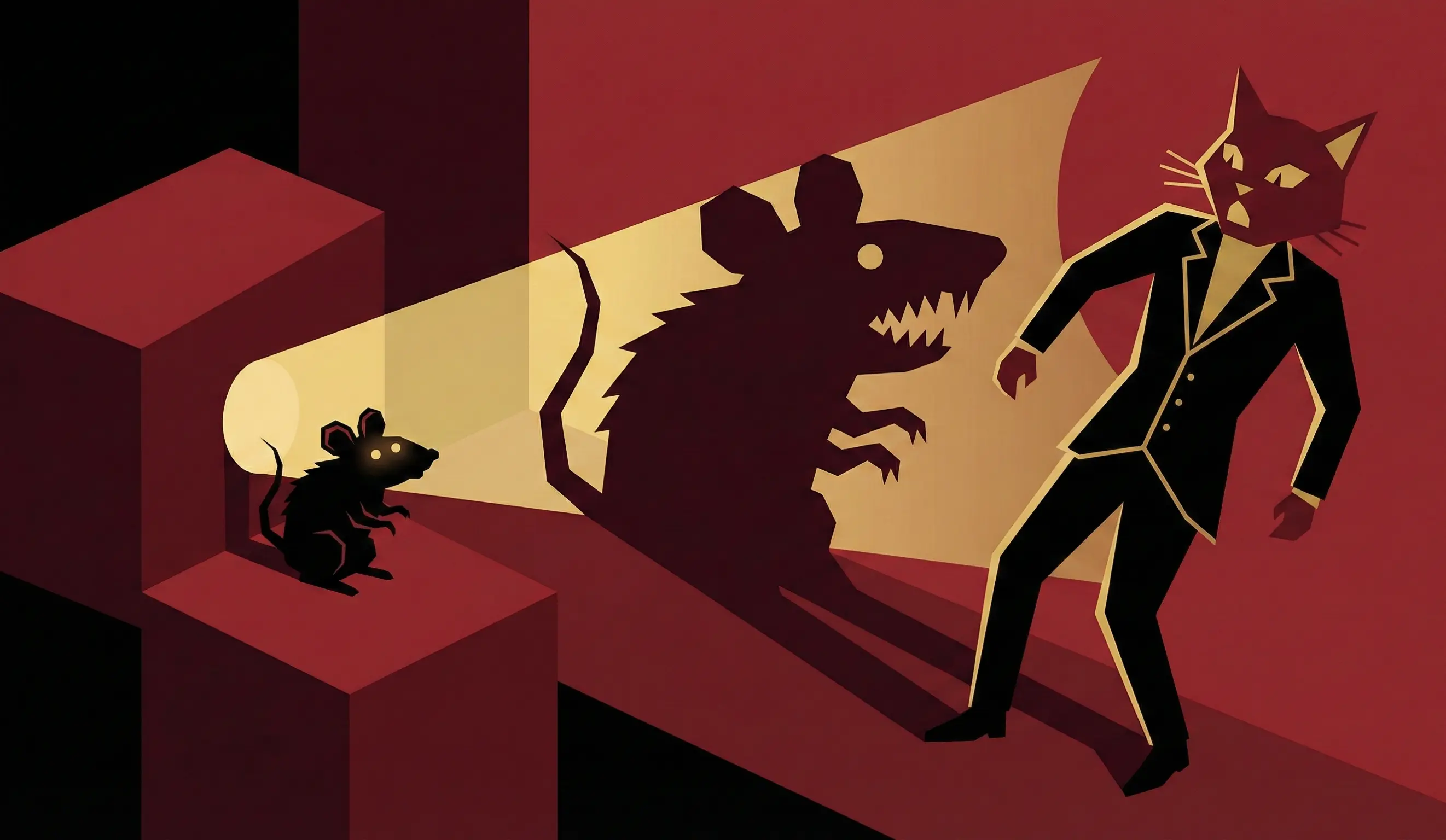
He forgot the Korean proverb: A cornered rat will dare to bite the cat.
The art of buying time
Mr Kim is now under investigation for a dozen allegations, many supported by substantial circumstantial evidence. However, his delicate position within the party makes the prospect of justice murky.
First, he is a key ally of President Lee within the party. Frequent readers of this newsletter will recall the rivalry between President Lee and the party chief Jung Chung-rae. With the party chief operating on his own agenda, Mr Kim has served as President Lee’s primary interface with the parliament.
Second, while Mr Kim is hardly Mr Jung’s ally, the party chief cannot afford to let Minjoo fall into a legal quagmire over election misconduct with local elections looming. This explains why Mr Jung agreed to a special prosecutor regarding the Unification Church bribery scandal (yielding to opposition demands) but has stonewalled any special inquiry into Mr Kim.
Third, and most importantly, the police have shown little enthusiasm for investigating one of the most powerful figures in a ruling administration still in its honeymoon period.
The new criminal justice regime—born of Minjoo’s years-long “prosecution reform”—grants the police far greater discretion. (I view this as the consequence of an unholy alliance between Minjoo and the police, which I will detail in an upcoming deep dive.) The police essentially sat on their hands while a key person of interest—the alleged briber—fled the country a week ago.
Mr Kim is trying to buy time. Though he has resigned as floor leader, he refuses to leave the party. There are more than two years until the next parliamentary election—plenty of time, he hopes, for the public to forget.